About This Recipe
There's something quietly brilliant about a dish that asks you to do almost nothing and delivers comfort anyway. This garlic and olive oil pasta — known in Italian kitchens as aglio e olio — has been a Canadian weeknight lifeline since before anyone bothered to put it on a blog. You start with pasta, a splash of olive oil, and a handful of garlic cloves, and somehow it all comes together into something silky and deeply satisfying.
The magic lives in the starchy pasta water, which you reserve before draining and fold back into the skillet. That liquid gold emulsifies with the oil and garlic to coat every strand, turning humble pantry staples into dinner that tastes like someone cared. It's fast enough for a Tuesday, elegant enough for guests, and forgiving enough that even a tired cook can pull it off.
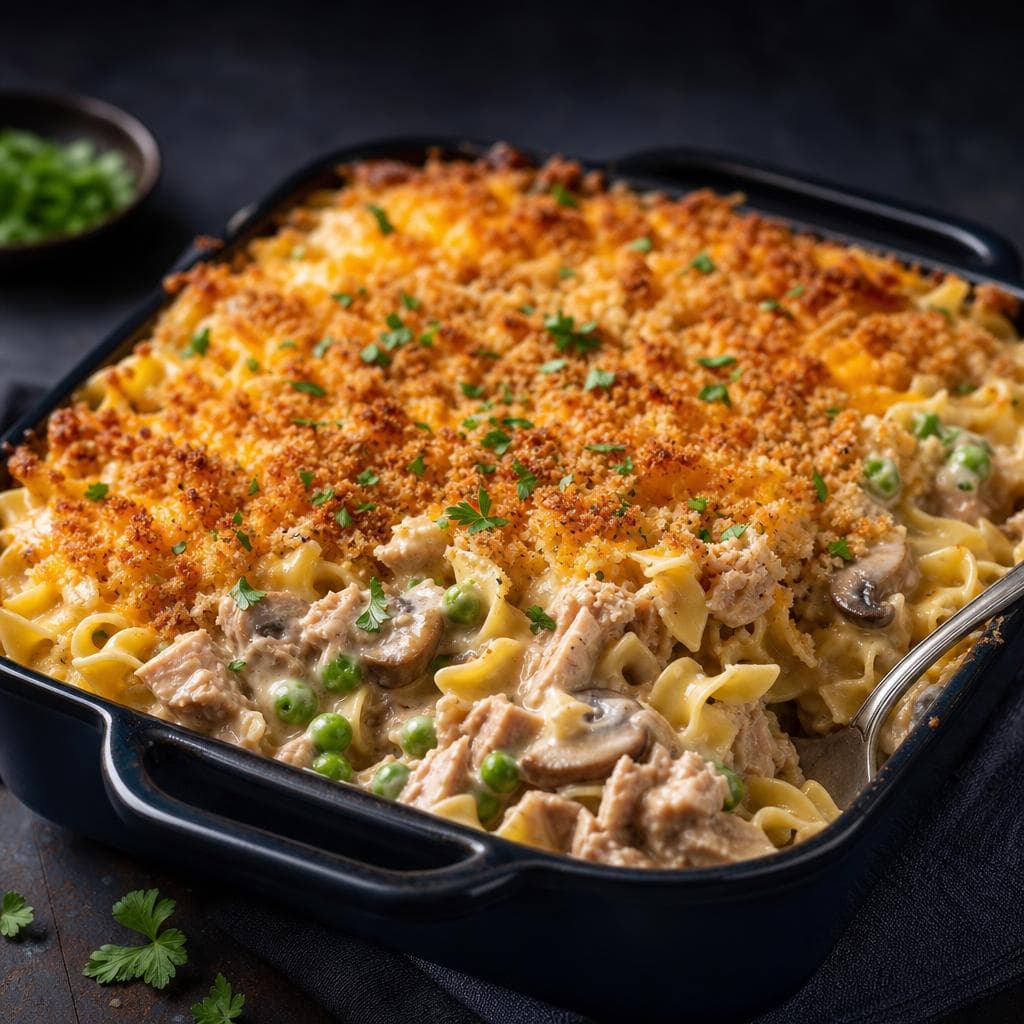
Tips for the Best Tuna Noodle Casserole
Saliez généreusement votre eau de cuisson — elle doit avoir le goût de la mer — car une fois les pâtes dans la poêle, il n'y a plus de place pour corriger l'assaisonnement. Cuisez les pâtes une minute de moins que le temps indiqué, puisqu'elles continueront à cuire dans la sauce, et gardez la chaleur modérée quand vous faites revenir l'ail pour éviter qu'il ne devienne amer. Remuez vigoureusement les pâtes égouttées dans la poêle, en ajoutant l'eau de cuisson par petites quantités jusqu'à ce que la sauce adhère à chaque brin.
What to Serve With It
This dish shines alongside a crisp green salad dressed with lemon and good olive oil, or a simple arugula tossed with shaved Parmesan. In Canada, I often serve it with a loaf of crusty French bread from the local bakery to soak up every last drop of sauce, and a glass of Pinot Grigio or a crisp local lager rounds out the table nicely.
Storage & Reheating
Leftovers keep in the fridge for three days in an airtight container, though the pasta will absorb some sauce overnight — that's normal. Reheat gently in a skillet with a splash of water or broth, tossing over low heat until warmed through. You can freeze portions for up to two months, but expect a slightly softer texture once thawed and reheated.