About This Recipe
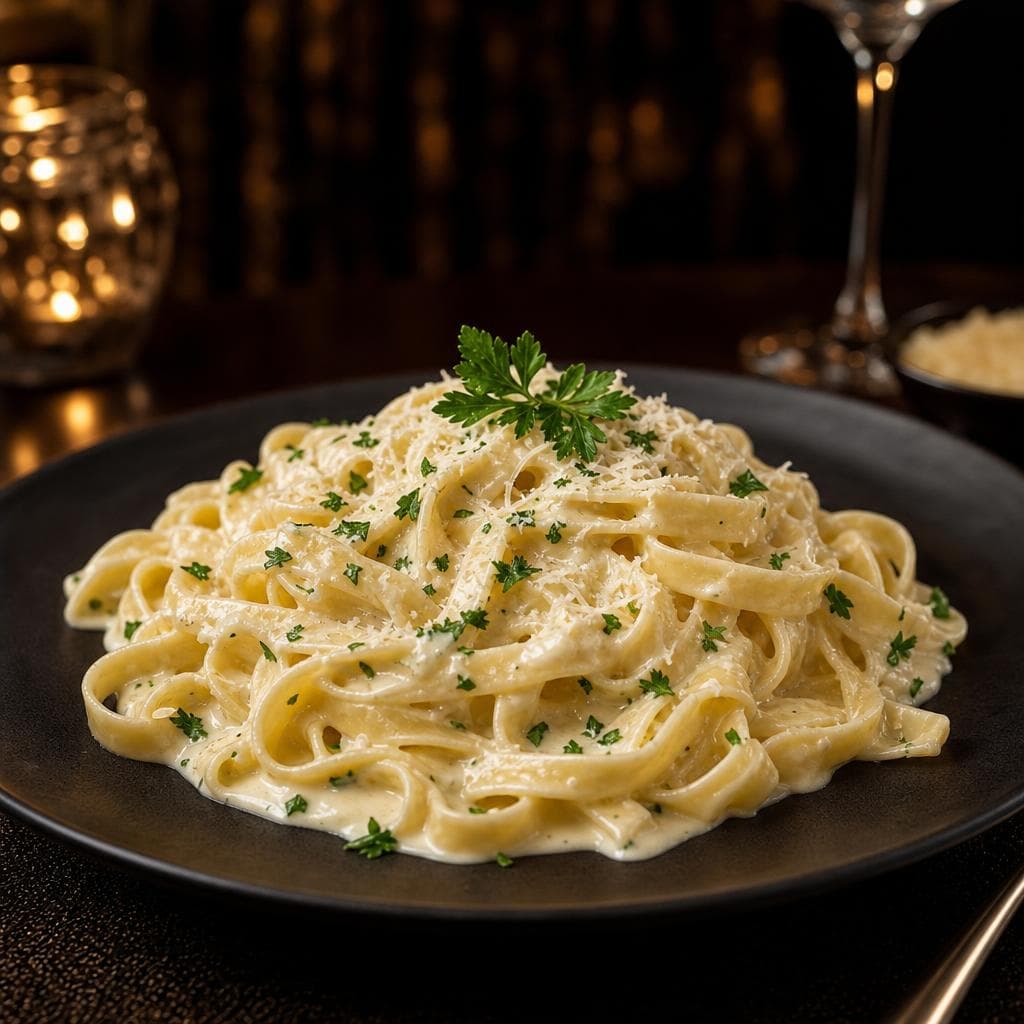
There's something almost magical about watching a simple ribbon of pasta become coated in a glossy, pale-golden sauce that clings to every strand — that's the heart of fettuccine alfredo, and it's one of those dishes that looks deceptively modest until you take that first forkful. What makes this version truly sing is the balance: the salty depth of freshly grated Parmigiano-Reggiano meeting the velvety richness of 35% cream, all tied together with a whisper of garlic warmed gently in olive oil. No shortcuts, no hidden tricks — just the kind of honest, comforting food that feels like a warm hug on a cold Tuesday night.
I make this at least once a week during the long Canadian winters, when the wind howls off Lake Ontario and the last thing anyone wants is anything complicated. The whole thing comes together in twenty minutes — five minutes prep, fifteen minutes at the stove — and yet the result has a restaurant-quality silkiness that belies its simplicity. The secret, of course, lives in that reserved pasta water: starchy, salty, and absolutely essential for coaxing the sauce into that impossible-to-forget emulsion that coats every single strand of fettuccine.
Tips for the Best Fettuccine Alfredo
La plus grande erreur qu'on commet ici, c'est de monter trop le feu dès que la crème touche la poêle — gardez à feu moyen ou moyen-bas et vous éviterez un mélange cassé et huileux. Surveillez votre ail de près ; trente secondes suffisent, car un ail brûlé devient amer et ruinerait toute la sauce. Quand vous incorporez les pâtes dans la poêle, travaillez vite et vigoureusement — la chaleur résiduelle des pâtes égouttées aide à fondre le fromage uniformément, mais seulement si vous bougez rapidement. Ajoutez l'eau de cuisson louche par louche ; dès que la sauce atteint cette consistance brillante qui adhère, retirez-la du feu immédiatement.
What to Serve With It
This dish shines alongside something bright and green to cut through the richness — I'd suggest a simple arugula salad tossed with lemon and shaved Parmigiano, or roasted broccoli with a squeeze of fresh lemon juice. Crusty Italian bread or grilled sourdough is perfect for mopping up every last drop of sauce from the plate. A light Pinot Grigio or a crisp Chardonnay pairs beautifully, and honestly, a glass of good Canadian icewine would be a wonderful indulgent touch for a weekend dinner.
Storage & Reheating
Leftover alfredo holds up best in the refrigerator, covered tightly, for up to two days — though the sauce will thicken considerably as it cools. To reheat, warm it gently in a saucepan over low heat with a splash of milk or cream to loosen things back up; microwaving tends to separate the dairy, so avoid it if possible. Freezing isn't recommended because the cream-based sauce will break and become grainy when thawed. If you must freeze, leave the pasta out and freeze the sauce separately in an airtight container for up to three months, then recombine when reheating.