About This Recipe
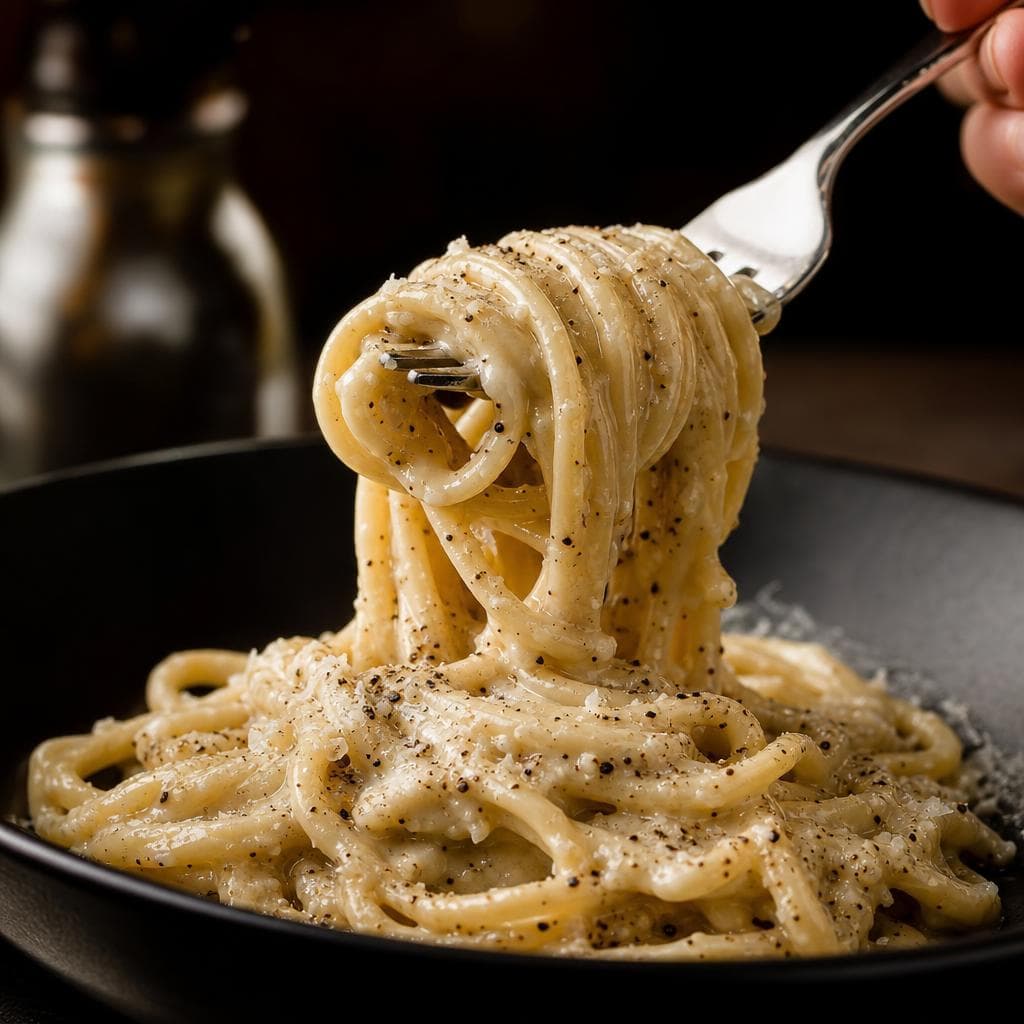
There's something almost illicit about how few ingredients cacio e pepe needs to pull off its magic. Just Pecorino Romano, freshly cracked black pepper, and starchy pasta water—three humble components that, when treated right, transform into a sauce so creamy it feels like cheating. The trick isn't in adding cream or butter; it's in the temperature dance between the hot pasta, the warm skillet, and the cheese coming to room temperature, all coaxed together with just enough reserved cooking liquid to coax a glossy, clinging emulsion from the sharp tang of the sheep's milk cheese.
This is the kind of dish Canadian home cooks come back to again and again when the pantry runs low but they still want something deeply satisfying. It comes together in twenty minutes flat, which means you can throw it on the table after a long workday without feeling guilty about the effort—or the wallet. Serve it on a chilly November evening with a wedge of aged Gouda and a glass of something crisp, and you've got yourself a meal that feels far more sophisticated than it has any right to be.
Tips for the Best Cacio e Pepe
The single most important thing is getting the temperature right before anything hits the pan. Take your Pecorino Romano out of the fridge at least half an hour ahead—it won't emulsify properly if it's cold. When you add the pasta to the skillet, turn the heat off completely before tossing in the cheese, then add pasta water a splash at a time while stirring like you're making mayonnaise. If the sauce breaks and looks greasy, you've hit one of two problems: either the skillet was too hot, or the cheese was too cold. Start over with fresh pasta water and a lower starting temperature for the pan.
What to Serve With It
Pair cacio e pepe with a simple green salad dressed in lemon and olive oil—the acidity cuts through the richness of the Pecorino beautifully. For a proper Canadian winter dinner, serve it alongside roasted root vegetables (carrots and parsnips caramelized in the oven while the pasta finishes) and a loaf of crusty sourdough to mop up every last bite. If you're feeding a crowd, a light Pinot Gris from Ontario's Niagara Peninsula pairs perfectly, or grab a crisp white wine from Quebec's Châteauguay region.
Storage & Reheating
Leftover cacio e pepe is best eaten within two days in the fridge, though the sauce will inevitably tighten up as the Pecorino sets. Reheat gently in a skillet over low heat with a splash of warm water or milk, stirring constantly until it loosens back up—you'll lose some silkiness but it'll still be delicious. Don't freeze this dish; the dairy separates irreversibly once frozen and thawed, and the pasta turns mushy no matter what. Freshness is everything here, which is part of what makes it worth making.